
Training South West Blog
What Does an Inclusive Workplace Actually Look Like?

Creating an inclusive workplace isn't about complicated initiatives, endless policies or worrying about saying exactly the right thing. It's about the everyday behaviours that help team members feel respected, valued and able to do their best work.
Across the South West, many businesses are small or medium-sized organisations where people know each other well. Family businesses, local employers and growing companies often rely on strong relationships, teamwork and trust. In workplaces like these, the way people communicate, support one another and deal with challenges has a huge impact on morale, retention and business performance.
If you've heard the term inclusive workplace but aren't quite sure what it means in practice, you're not alone. Many business owners and managers in the South West want to create a positive workplace culture but aren't looking for complicated programmes. They simply want a workplace where everyone feels included and enjoys coming to work. Creating inclusive workspaces isn't about achieving perfection. It's about building an environment where people feel comfortable sharing ideas, asking questions, raising concerns and knowing they'll be treated with fairness and respect.
Why Does Inclusion Matter?
Every organisation benefits when employees feel comfortable sharing ideas, asking questions and raising concerns.
When people don't feel included, they often become quieter. They may avoid contributing in meetings, hesitate to challenge decisions or simply disengage. Over time, this can affect communication, innovation, collaboration and staff retention.
An inclusive workplace culture helps create an environment where people feel psychologically safe. Employees are more likely to:
- share ideas and suggestions
- collaborate effectively
- ask for help when needed
- challenge problems respectfully
- support one another
- remain engaged with their work
Inclusion is about helping individuals and teams perform at their best.
What Does Workplace Inclusion Look Like?
Many people assume inclusion requires major organisational change. In reality, it's often reflected in small, everyday behaviours.
For example:
An inclusive workplace is one where:
- everyone is invited to contribute during meetings
- different viewpoints are welcomed, even when people disagree
- feedback is given respectfully and consistently
- inappropriate comments are addressed rather than ignored
- managers actively listen before making decisions
- achievements are recognised fairly
- employees feel comfortable asking questions without fear of embarrassment
These behaviours help create trust, and trust is one of the foundations of successful teams, particular in South West teams which are often a little smaller and require the input of everyone to drive success.

The Role of Inclusive Leadership
Managers play a significant role in shaping workplace culture.
Inclusive leadership involves creating the conditions where others feel confident contributing their opinions and ideas.
Inclusive leaders typically:
- listen with curiosity rather than assumption
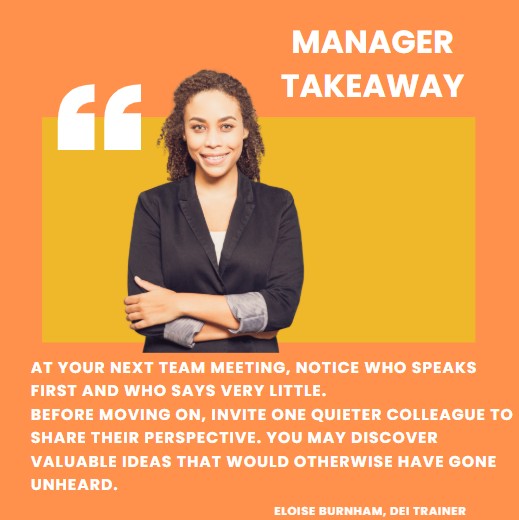
- encourage quieter team members to share their views
- recognise different perspectives
- explain decisions openly
- challenge disrespectful behaviour promptly
- create opportunities for everyone to contribute
- remain approachable when mistakes happen
Employees often take their cues from their manager. If leaders model respect, fairness and openness, those behaviours are much more likely to become part of the team's culture.
Common Mistakes Managers Make
Creating an inclusive workplace isn't always straightforward. Many organisations unintentionally undermine their own efforts.
Some common mistakes include:
Assuming everyone experiences the workplace in the same wayPeople bring different backgrounds, experiences and perspectives. Listening to those experiences is often more valuable than making assumptions.
Treating inclusion as a one-off training eventTraining is most effective when it's supported by everyday leadership behaviours and ongoing conversations.
Avoiding difficult conversationsManagers sometimes worry about saying the wrong thing, so they avoid addressing inappropriate behaviour and difficult conversations altogether. However, silence can often be interpreted as acceptance.
Focusing only on policiesPolicies are important, but culture is shaped by everyday interactions between colleagues.
Practical Ways to Build a More Inclusive Workplace
Small actions, repeated consistently, often have the greatest impact on creating inclusive workplaces:
Managers can start by:
- asking for everyone's views during meetings
- making sure quieter colleagues have opportunities to contribute
- giving balanced and constructive feedback
- challenging inappropriate comments respectfully
- recognising contributions fairly across the team
- checking that important information reaches everyone
- encouraging curiosity instead of assumptions
- creating an environment where questions are welcomed
Over time, these behaviours help build trust, improve communication and strengthen collaboration.
Looking to Build a More Inclusive Workplace?
At Training South West, we help organisations create respectful, inclusive workplace cultures through practical, engaging training that managers and employees can immediately apply in their day-to-day work.
Our workshops focus on real workplace situations rather than theory, helping teams improve communication, strengthen leadership and build more inclusive ways of working.
Whether you're looking to support new managers, improve team communication or develop a more inclusive workplace culture, we'd be happy to discuss how we can help.
Contact Training South West today to find out more about our Equality, Diversity & Inclusion and Inclusive Leadership training programmes.
